
SEO vs AEO vs GEO: What’s the Difference and Why It Matters
Reading Time: ~5 Mins | Written By: Jason Serafica

Search isn’t just about ranking first on Google anymore. Over the past few years, Google has continued to add more SERP features such as featured snippets, local packs, People Also Ask, and recently, AI Overviews. These features compete directly with traditional organic results and often answer questions before a user clicks through to a website.
At the same time, people are also frequently using AI tools such as ChatGPT and Gemini to find information instead of searching the old way. Due to this shift, search marketers can no longer rely on SEO alone. To stay visible, brands now need to think about SEO, AEO, and GEO together.
What Is SEO?
SEO (Search Engine Optimization) focuses on helping your website rank higher in traditional
search engine results. It works by search engines discovering pages online and storing them in an index, so that when someone searches, the algorithm pulls the most relevant and credible pages for that query.
Optimizing for traditional search involves both on-page and off-page optimizations to help Google and other search engines view the website as a trusted source and surface it organically for relevant keyword searches.
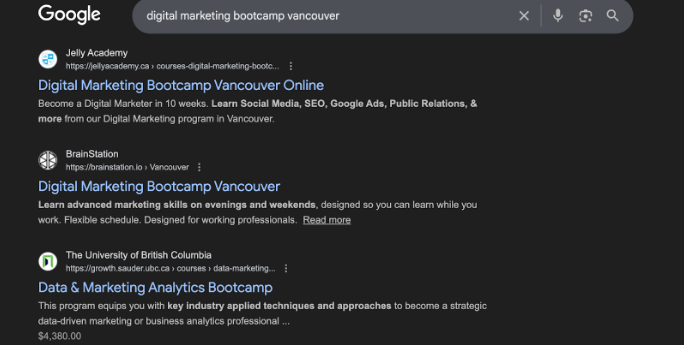
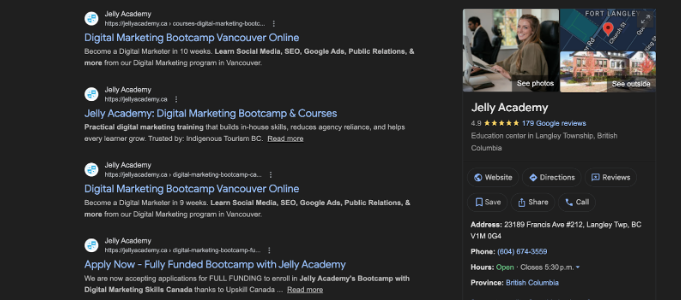
What SEO Optimizes For:
Organic rankings on Google and Bing
Local packs and map results
Featured snippets
Clicks and website traffic
Core SEO Activities
Technical SEO (page speed, indexing, site security, accessibility, schema markup, etc.)
On-page SEO (page title, meta description, internal links, keyword targeting, etc.)
Off-page SEO (backlinks, local listings, brand mentions across other channels)
The main goal of SEO is to drive traffic to your website by ranking as high as possible for relevant searches. With that being said, SEO is still important, but it’s no longer the only way that users use to discover brands.
What is AEO
AEO (Answer Engine Optimization) is about structuring content so it can be easily pulled as a direct answer.

This is especially important for
Google AI Overviews
Featured snippets
Voice assistants such as Siri, Google or Alexa
How AEO Works
Content answers questions clearly and quickly
Uses concise language and structured formatting
Prioritized “best answer” over long explanations
The main goal of AEO is to be the answer, not just one of many search results. Instead of competing for clicks, AEO focuses on being selected as the trusted response.
What is GEO
GEO (Generative Engine Optimization) goes one step further.
GEO focuses on making sure your content can be understood, trusted, and cited by generative AI systems when they generate answers to user queries.
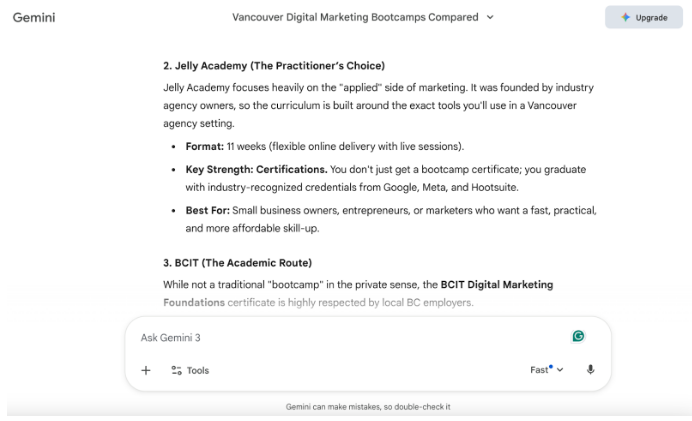
Gemini 3 result when asked, “What is the best digital marketing bootcamp in Vancouver?”
How GEO Differs
Optimizes for AI-generated responses, not rankings
Ensures content is machine-readable and rich in context
Helps AI tools reference your brand in generated answers
This includes:
Clear structure and semantic meaning
Strong topical authority
Wide content distribution so AI systems can find it
The main goal of GEO is to increase brand visibility and citations within AI-generated responses.
SEO vs AEO vs GEO: Quick Comparison
SEO
Ranks content in organic results and local packs
Focuses on traffic and clicks
Uses technical, on-page, and off-page optimization
AEO
Optimizes content to directly answer a question
Targets AI overviews, snippets and voice search
Focuses on clarity and speed of answers
GEO
Helps generative AI understand and cite your content
Prioritizes content, authority and distribution
Aims for brand mentions within AI-generated responses
All three support brand awareness and visibility, just in different ways.
How Keyword Strategy is Changing
Not every search query will trigger an AI overview.
Searches That are Less Likely to Trigger AI Overviews
Service-based keywords
Example: “Digital Marketing Bootcamp Vancouver”
High intent commercial searches
Examples: “Best digital marketing course in Vancouver”, “Best digital marketing bootcamp in Vancouver”
Local queries (“near me” searches)
Examples: “Digital marketing course near me”, “Digital marketing services near me”
Searches That are More Likely to Trigger AI Overview
Informational queries
‘What is”, “how does”, and comparison type searches
Examples: “What is SEO”, “How does Google rank websites?”
These keywords should be considered in awareness-focused content strategies, where AEO and GEO will matter more.
Why Authority, Experience & Trust Matter More Than Ever
AI systems don’t just look for keywords - they evaluate the credibility of the content.
Authority
Earn backlinks and citations from trusted sources
Mentions from credible and relevant websites signal higher authority and value
Experience
Provide insights that competitors do not
Go beyond basic blogs with video tutorials, case studies or original research
Trust
Maintain consistent branding across platforms
Build a strong social media presence on YouTube, Instagram, TikTok and LinkedIn
Collect and manage online reviews on relevant listings such as Google Business Profile, Yelp, and TrustPilot
Ensure consistent NAP (Name, Address, Phone Number) across all listings.
These signals help both search engines and AI systems trust your brand.
The Future of Search: A Hybrid Approach
Search is no longer one-dimensional. Today’s visibility comes from a mix of:
Traditional organic rankings
AI Overview and featured answers
Generative AI responses
SEO, AEO, and GEO each solve a different problem, and brands that combine all three are better positioned for long-term success in the future.
A hybrid strategy helps:
Increase visibility across search and AI platforms
Build long-term brand awareness
Stay competitive as search continues to evolve
The future of search is not SEO or AI - It’s both, working together.
Explore the latest insights, strategies and industry updates on the Jelly Academy blog and keep learning as the digital landscape changes.